We built a new website for TopSkin Clinic Med Spa, a K-beauty med spa on Satellite Boulevard in Duluth, Georgia, and moved the clinic’s domain to it on November 12, 2026. The site runs in English, Korean and Vietnamese, sorts treatments by skin concern, shows the clinic’s own before-and-after photos, and sends booking requests straight to the clinic’s inbox. Here is what we built and why.
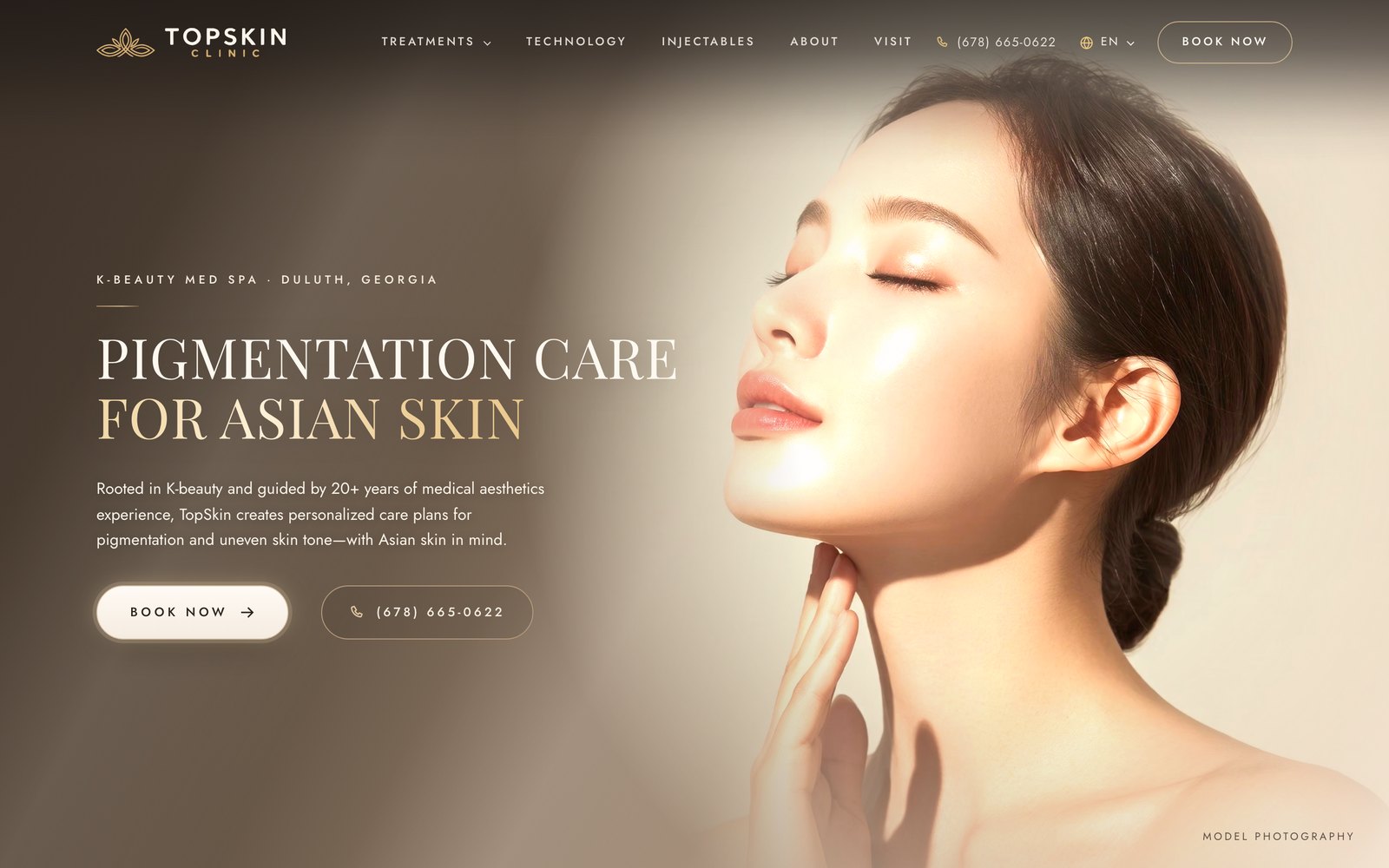
The new site at a glance
- 3
languages
English · Korean · Vietnamese
- 36
pages
12 per language
- 6
treatment pages
one per skin concern
- 9
before & after cases
the clinic’s own patients
Start from what the clinic already says
The clinic’s old site, built on a website builder, already described its treatments, devices, team and frequently asked questions. We treated that text as the source. Every fact on the new site, from device names to opening hours, comes from the old site or from the clinic directly, and nothing was added to fill space. The old site named ten devices, so the new technology page explains those ten and what each one is used for.
Treatments by skin concern, not by machine
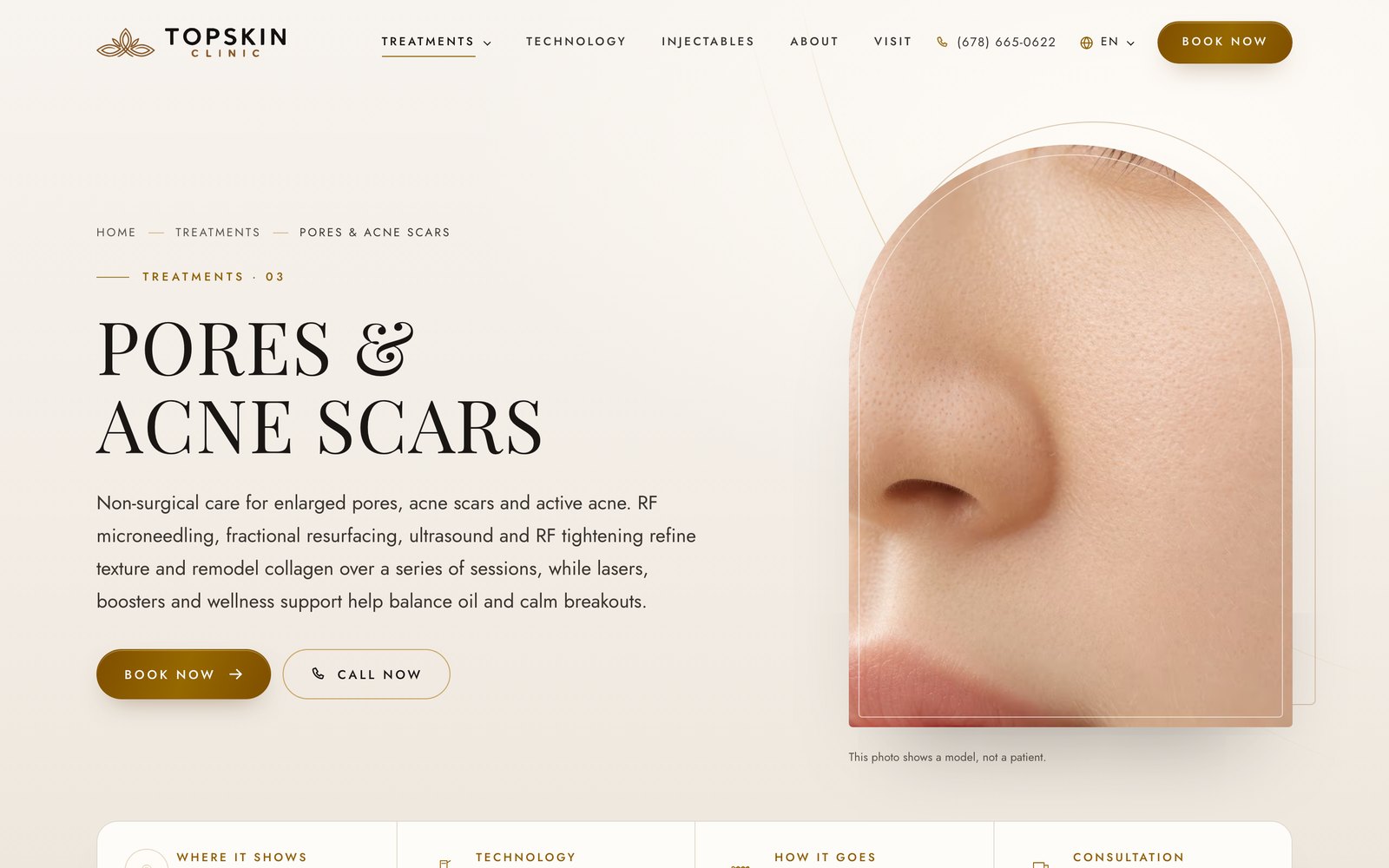
Patients rarely search for a device name. They search for “melasma treatment” or “acne scar treatment near me.” So the six treatment pages follow concerns: Pigmentation & Tone, Glow & Renewal, Pores & Acne Scars, Lifting & Firming, Redness & Vessels, and Injectables & Natural Rejuvenation. Each page covers where the concern shows on the face, which devices the clinic uses for it, how a series of sessions goes, and the questions people ask at a consultation.
A 3D cross-section of the skin shows which layer each device reaches, using the depths the clinic’s own descriptions give. On phones, a concern picker replaces the wide device-by-concern table so nothing needs sideways scrolling.
Real before-and-after photos, clearly labeled
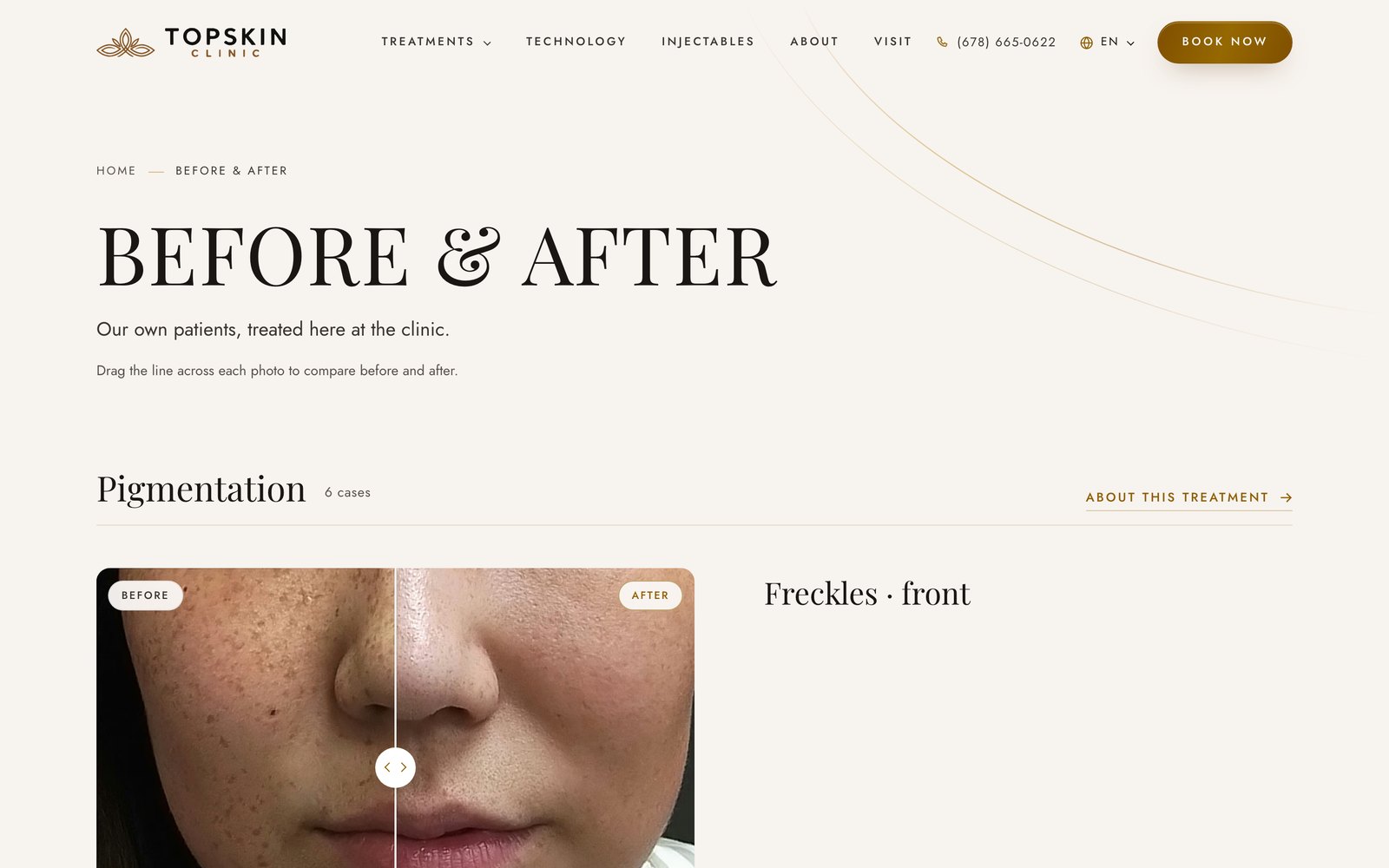
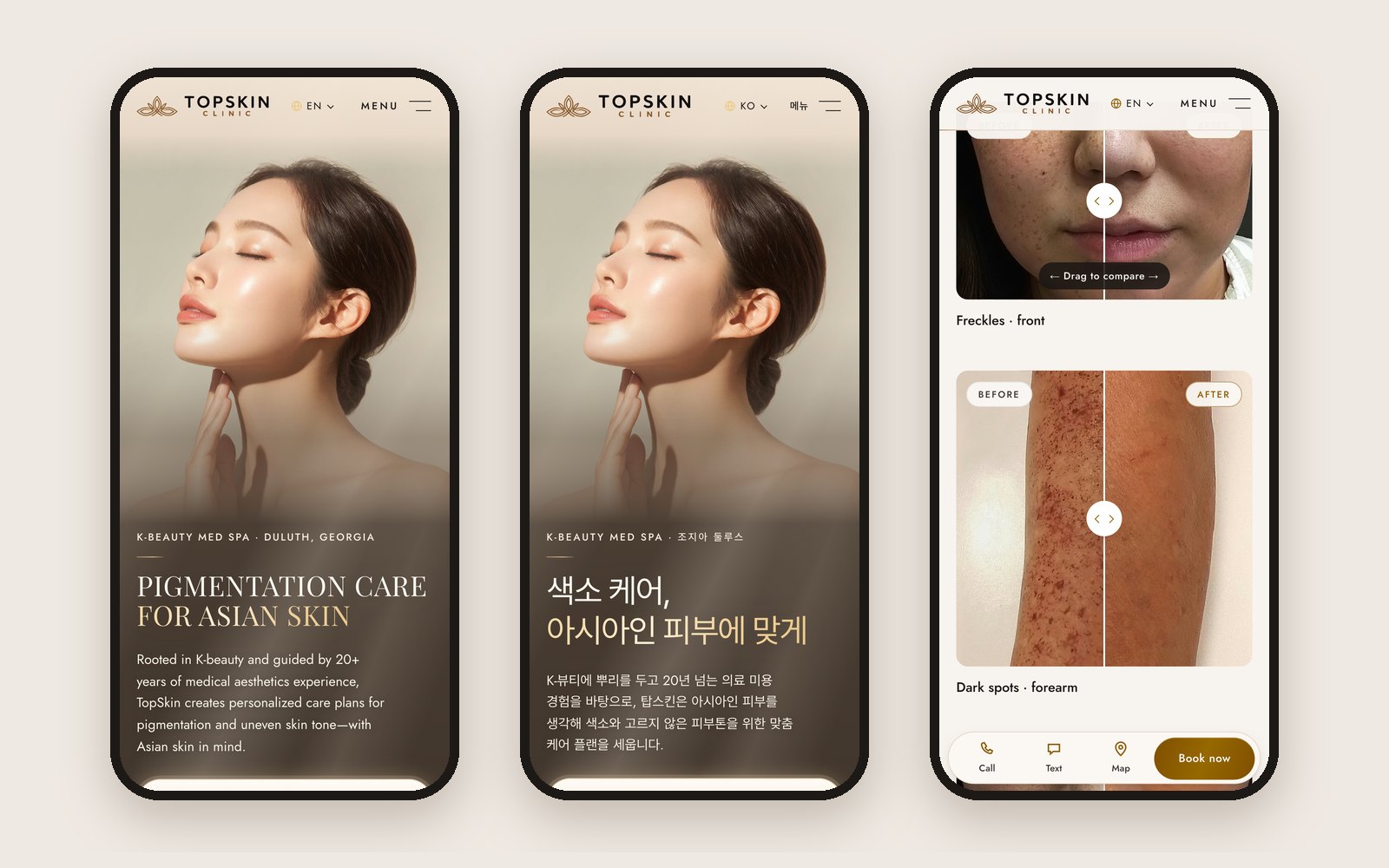
Med spa visitors look for proof first. The Before & After page uses only the clinic’s own patient photos, nine cases grouped by concern, each with a slider you drag to compare. Both photos in a pair get exactly the same processing, so the difference you see is the treatment, not the editing. Every other photo on the site is marked as a model, and the footer says that individual results vary.
One tap to call, text, find or book
Most visits to a med spa site happen on a phone. A small dock at the bottom of every page holds Call, Text, Map and Book. It slides out of the way when the page already shows those buttons and while the visitor is typing. The booking form sends the request to the clinic’s inbox, and a visitor can also send the same request as a text message instead.
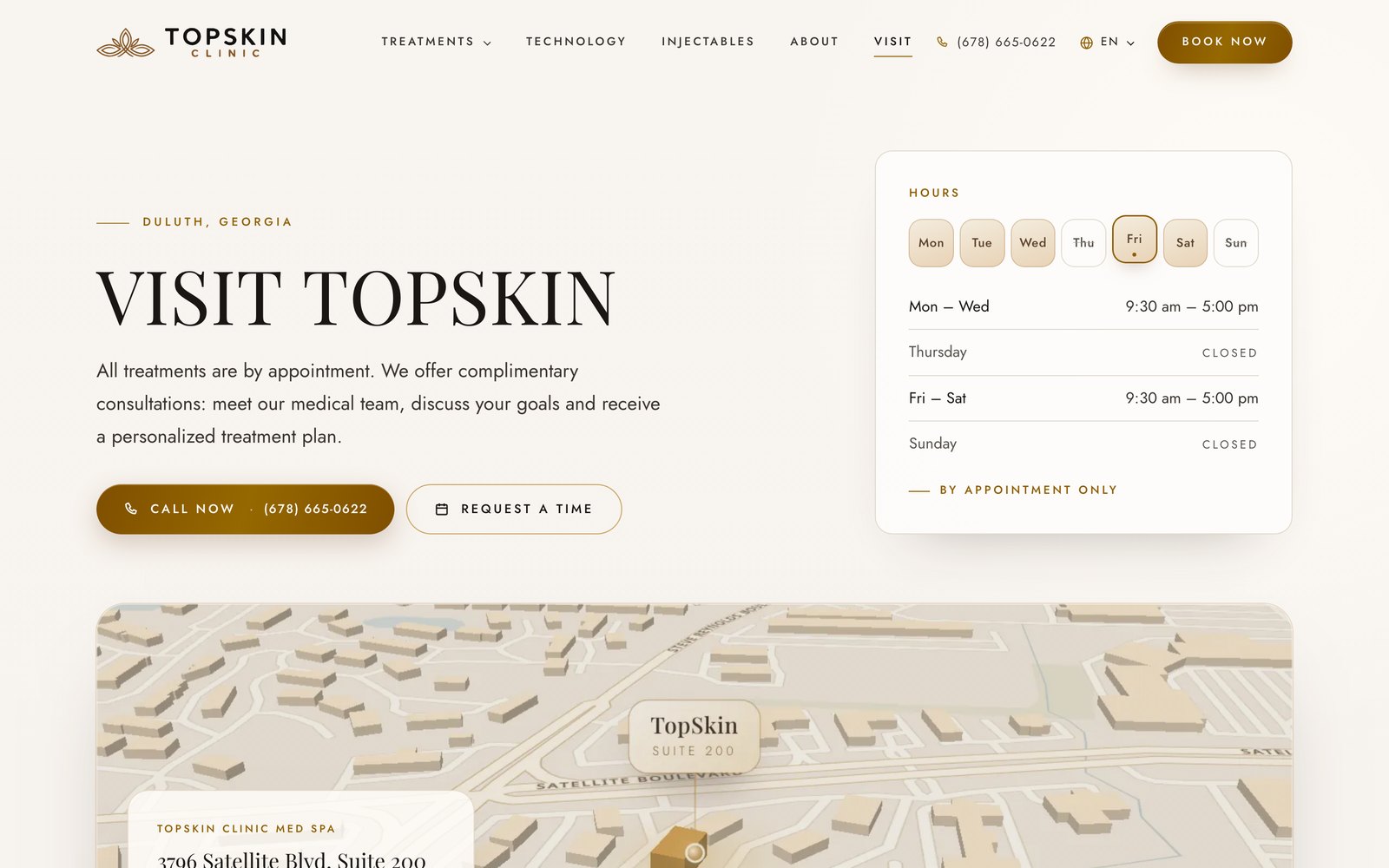
A 3D map to Suite 200
The Visit page has a 3D map of the blocks around the clinic, drawn from map tiles we host ourselves rather than a Google Maps embed, so it carries no third-party tracking. It marks the building and Suite 200, with the week’s hours beside it. On phones the map loads only when the visitor taps it, which keeps scrolling smooth.
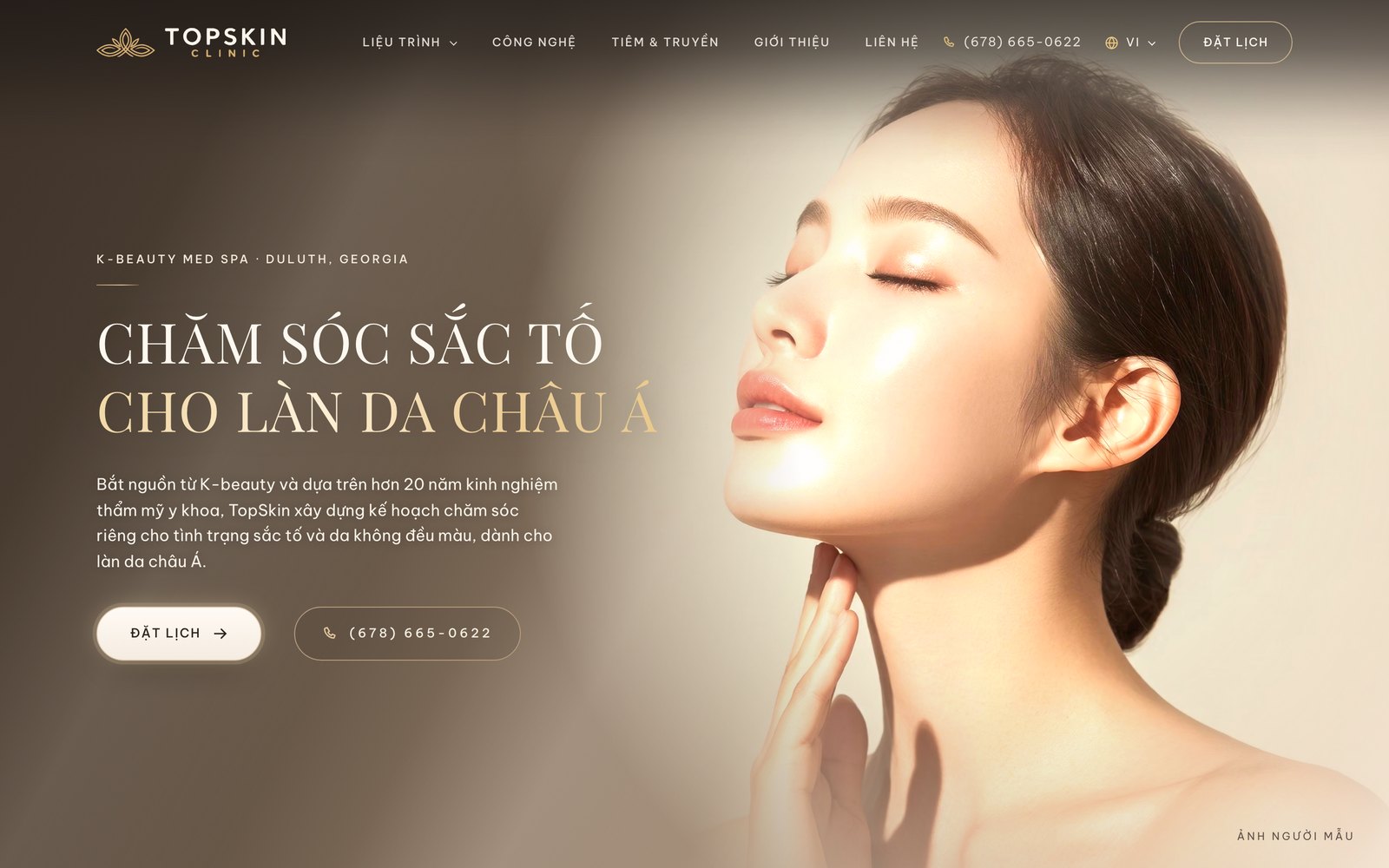
English, Korean and Vietnamese
Every page exists in all three languages with the same structure, so a patient reading Korean or Vietnamese finds the same information in the same place. The language menu sits in the header, and the booking form works in each language.
Moving the domain without losing search history
Shipped with the launch
- Every old page address redirects (301) to its new page, so existing links, bookmarks and search results keep working
- MedicalClinic structured data with the address, map coordinates, opening hours and phone number
- hreflang tags that tie together the English, Korean and Vietnamese version of each page
- A 36-URL sitemap verified in Google Search Console, with the new pages also announced to Bing through IndexNow
- Google Analytics 4 with calls and booking requests counted as key events, plus a privacy notice in all three languages
- Lighthouse on a mobile profile, home page: 100 for accessibility, best practices and SEO, and 90+ for performance
Rankings take a few weeks to settle after a domain moves. We will update this post as calls and booking requests come in.
Checklist before you rebuild a med spa website
Check these on your current site first
- Are your before-and-after photos your own patients, with matching light and angles? Is every model photo labeled?
- Can a visitor call, text or book in one tap on a phone?
- Does each skin concern have its own page, or is everything on one services page?
- When you change website platforms, will every old URL redirect to its new page?
- Is the site verified in Google Search Console, and are calls and booking requests tracked?
- If many of your patients read Korean or Vietnamese, can they read the whole site in their language?